The Antibiotic You Did Not Need May Cost Someone Their Life: America's Growing Resistance Crisis
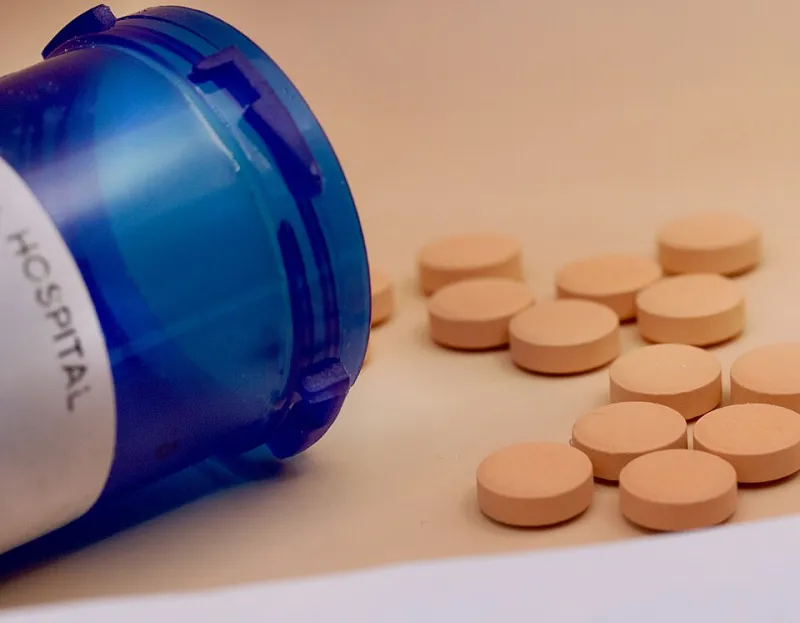
Photo: NIAID, CC BY 2.0, via Wikimedia Commons
In 1928, Alexander Fleming's accidental discovery of penicillin fundamentally transformed the trajectory of human medicine. Bacterial infections that had claimed lives for millennia became manageable, then treatable, then largely routine. Nearly a century later, the medical community is confronting an uncomfortable reality: the era of reliable antibiotic efficacy may be approaching its end — not because of scientific failure, but because of systematic misuse.
Antimicrobial resistance (AMR) is not a distant hypothetical. The Centers for Disease Control and Prevention estimates that drug-resistant bacteria and fungi cause more than 2.8 million infections in the United States each year, resulting in approximately 35,000 deaths. Globally, the toll is far more severe. A 2022 study published in The Lancet attributed 1.27 million deaths directly to AMR in a single year, with projections suggesting that number could reach 10 million annually by 2050 if current trends continue.
These numbers carry a critical implication: the choices made at individual pharmacies and in individual physician offices today are shaping whether future generations will have effective tools to treat pneumonia, urinary tract infections, surgical complications, or a child's ear infection.
How Resistance Develops — and Why Every Dose Matters
To understand the stakes, it is necessary to understand the mechanism. Bacteria are adaptive organisms. When exposed to an antibiotic, the vast majority are killed — but a small subset may carry genetic mutations that allow them to survive. These resistant bacteria then reproduce, passing their resistance traits to offspring and, through a process called horizontal gene transfer, to entirely different bacterial species.
Each unnecessary antibiotic exposure — whether from a prescription that was not warranted or a treatment course abandoned midway — creates selection pressure that favors the survival and proliferation of resistant strains. The process is evolutionary, relentless, and cumulative.
The consequences are already visible in clinical settings. Carbapenem-resistant Enterobacteriaceae (CRE), sometimes called "nightmare bacteria" by the CDC, are now present in healthcare facilities across all 50 states. Methicillin-resistant Staphylococcus aureus (MRSA) infections, once predominantly hospital-acquired, are increasingly occurring in community settings. Gonorrhea — a disease once easily resolved with a single antibiotic dose — now requires combination therapy due to widespread resistance, and fully resistant strains have been documented.
The Prescription Problem
A substantial portion of the resistance crisis originates not at the patient level, but at the prescribing level. The CDC has estimated that approximately 28 percent of antibiotic prescriptions written in outpatient settings in the United States are unnecessary — prescribed for viral illnesses such as colds, flu, and most sore throats, against which antibiotics have no efficacy whatsoever.
The drivers of overprescription are well-documented. Patient expectation plays a significant role: studies have shown that physicians are more likely to prescribe antibiotics when they perceive — accurately or not — that a patient expects them. Time-constrained appointments, diagnostic uncertainty, and the path of least resistance in a busy clinical environment all contribute. In some cases, the calculus is straightforward: a physician may reason that prescribing carries little downside for the individual patient, even if the systemic cost is significant.
This reasoning, repeated across hundreds of millions of prescriptions annually, is precisely what has brought medicine to its current juncture.
Over-the-Counter Access and the Self-Treatment Hazard
In the United States, antibiotics are legally available by prescription only — a regulatory distinction that has meaningfully slowed, though not eliminated, the problem of unsupervised use. However, a substantial informal market exists. A 2019 study published in Annals of Internal Medicine found that approximately one in five Americans reported obtaining antibiotics without a prescription, sourcing them from friends, family members, online pharmacies, or — in border communities — from Mexican pharmacies where many antibiotics remain available over the counter.
This pattern of self-treatment is particularly concerning because individuals without clinical training are poorly positioned to determine whether an infection is bacterial or viral, which antibiotic class is appropriate, what dose is required, or how long treatment should continue. Incomplete or incorrect courses are among the most efficient drivers of resistance development.
What Individual Patients Can Do — and What the System Must Change
Responsible antibiotic stewardship at the individual level begins with a willingness to tolerate diagnostic uncertainty. When a physician recommends watchful waiting for a suspected viral illness, that recommendation reflects evidence — not indifference. Patients who push back against that guidance, explicitly or implicitly, contribute to prescribing pressure.
Several concrete practices support responsible use:
Complete every prescribed course. Even when symptoms resolve, stopping early allows partially resistant bacteria to survive and proliferate. If a course is prescribed, it should be completed unless a physician advises otherwise.
Never use leftover antibiotics. Saving unused antibiotics for future self-treatment is both legally questionable and medically hazardous. Dosing, duration, and appropriateness are diagnosis-specific.
Ask whether an antibiotic is truly indicated. Patients have both the right and the responsibility to ask their provider whether a prescription is necessary, what it is treating, and what the alternatives are. A physician who welcomes that question is practicing evidence-based medicine. One who does not may warrant a second opinion.
Avoid sourcing antibiotics outside the formal medical system. Online pharmacies operating without proper licensure and informal sharing networks bypass the diagnostic safeguards that exist precisely to prevent misuse.
At the systemic level, the solutions are more complex but equally urgent. Expanded rapid diagnostic testing — tools that can distinguish bacterial from viral infections within minutes — would reduce the diagnostic uncertainty that drives precautionary prescribing. Reimbursement structures that reward appropriate prescribing rather than patient satisfaction scores would alter physician incentives. Stronger federal oversight of online pharmaceutical sales would close a significant gap in the current regulatory framework.
The Stewardship Imperative
Antimicrobial resistance is, at its core, a tragedy of the commons — a situation in which individually rational decisions produce collectively catastrophic outcomes. Every person who demands an antibiotic for a cold, every provider who prescribes one to avoid a difficult conversation, and every system that fails to invest in alternatives is making a withdrawal from a shared biological account that future patients will need to draw upon.
The infections that will become untreatable in a post-antibiotic world are not exotic or rare. They are the ones Americans encounter every year: respiratory infections, urinary tract infections, skin wounds, post-surgical complications. The question of whether effective treatments exist for those conditions in 2040 is being answered, in part, by choices made at pharmacy counters and in examination rooms today.
That is not a comfortable truth. But it is one that responsible patients, providers, and policymakers can no longer afford to defer.